Table of Content
For example, remember that we mentioned dust mites earlier? They can exist in your home at or above about 50% humidity. More of them will be able to thrive at even higher levels above 60%.
You should check the humidity levels in your home at least once a week. If the level is too high, you may want to consider using a dehumidifier to reduce the humidity. Another way to reduce humidity in your home without a dehumidifier is to use a fan. Another way to reduce humidity in your home without a dehumidifier is to open your windows. First, you’ll want to seal off your house from the outside.
Using a humidifier can relieve ailments caused by dry air.
You can place these products in your home to help reduce the amount of moisture in the air. Outside of this range, your air and your body are more susceptible to airborne pollutants such as allergens, mold, mildew, and viruses. Replacing doors and windows with newer, more energy-efficient ones. Using a room humidifier, exhaust fans, or adding a humidifier to your HVAC system.

Straight and angled sleeves let you fit special insulation onto your pipes. All you need to do is slide the sleeves on and seal the joints with duct tape. Most HVAC professionals agree that anything between 30-60% humidity is acceptable for a home’s indoor environment. Anything lower or higher than that can create problems. Water has a specific heat capacity of 4,200 J/kg°C and dry air has a specific heat capacity of 1.012 J/kg°C.
Is Dehumidifier Water Safe to Drink?
When the dry winter air comes into your home and warms up, the air inside your house becomes drier in the process. Dry sinuses can make you vulnerable to colds, viruses, and infections. This problem is worsened by the fact that bacteria and viruses tend to live longer in dry air.

High indoor humidity can also damage your home by making wood swell up, paint and wallpaper peel, and doors and windows stick. High indoor humidity also provides a breeding atmosphere for insects and other pests. The right percentage of moisture in your indoor air is essential to help your HVAC maintain the best environment inside regardless of the outside temperature. If the humidity in your home is too high, consider using a whole-home dehumidifier. If your home is extremely dry or humid, it’s likely not within the ideal 40–60% indoor humidity range.
Humidity-Related Terms To Know for Indoor Spaces
An indoor humidity of 30-60% is recommended by the EPA to reduce mold growth. As the snow melts and it starts to rain, humidity levels see a dramatic spike. Depending on where you live, it may very well be twice as humid during spring compared to winter. The normal humidity for this time of the year is 30–60%. Ciresi advises keeping your windows closed at night during the spring and fall, when the air is humid .

Jim and his wife are committed to preserving open space for water quality and conservation. Essential for the environment and sustainability for future generations. He also enjoys traveling, reading, writing, and spending time with his family outdoors. If the humidity in the sleeping area is below 30%, then yes. Sleeping with a humidifier in the winter is recommended to prevent dry skin and irritated nasal passages.
The difference in specific heat capacity of 30% vs 40% relative humidity levels air is insignificant. You won’t have more than $10 on electric bills during the winter just because you have a lower humidifier setting on your furnace humidifier. Some speculate that indoor air with higher water vapor content is more difficult to heat.
Therefore, your living space is essentially sandwiched between two humid areas. Additional humid-generating problems are hot showers, oversized or improperly maintained HVAC systems, overwatering houseplants, plumbing leaks, and open garages. In practice, your 72-degree home could easily be uncomfortably hot with humidity that’s too high, just as it can be too cold in the wintertime if you have dry air. Temperature is what we think of when we consider indoor comfort, but humidity levels matter almost as much.
Humidity level is equivalent to relative humidity; these terms are often used interchangeably. Relative humidity is an important concept to understand. When water from the ocean, seas, and lakes evaporate into the atmosphere, the result is humidity. When the atmosphere has more humidity than it can hold, it condenses into rain and re-enters the large bodies of water in Mother Nature’s wonderful environmental cycle. If your HVAC partner isn’t listening to your problems in this manner, they’re not really looking out for you. I don’t care if you’re in our service area or not; you should be working with someone who is trying to be proactive about managing your home’s comfort.

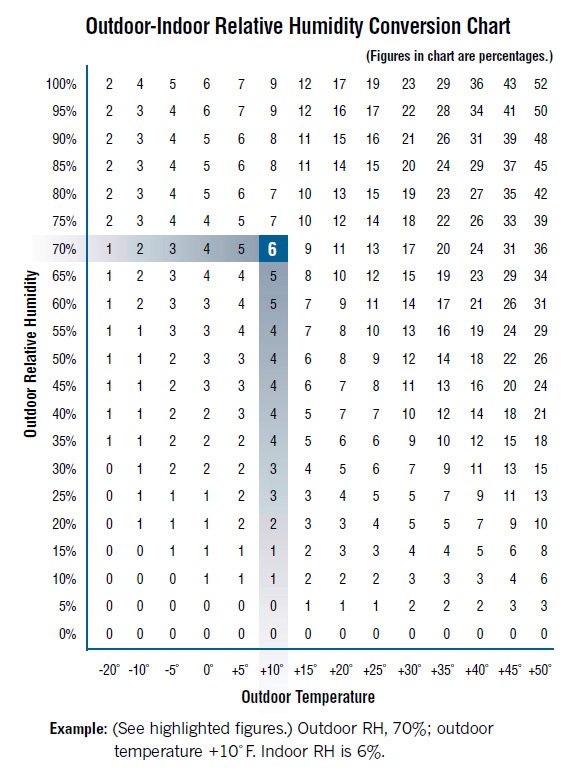
However, to discourage the growth and spread of mold, levels should be kept below 50%. But, again, adjust this to match your comfort levels. This relative humidity in your home should also scale with the outdoor absolute humidity. One of the most effective ways to increase the humidity level in the house is with a whole-house humidifier or a portable humidifier, depending on your needs.
Houseplants are also known to increase humidity, but only by a small amount. The best thing about humidity is you don’t have to be scientific about it. As long as you manage not to go over 60%, you’re good. If you’re sensitive to moisture levels, go for 30–50%. This is the ideal range not only for humans but also for most pets and plants.
You can also have frequent bleeding in your nasal passages, chapped lips, sinus infections, and sore throats. The humidity in Florida is always at its highest during the summer and lowest in the winter as mentioned in our home humidity levels chart. Depending on the construction of your home and how well it is insulated, you may not need a humidifier in the winter at all.
This is the range that is most comfortable for people and helps to prevent mold and mildew growth. It’s important to lower the indoor humidity if you have any excess moisture in your home. If you have too much humidity, it can lead to numerous issues. Low humidity can cause dry eyes, dry throat, bloody noses, and other health problems. Besides managing the sources of humidity, you can also actively remove humidity from the air inside of your house by using a dehumidifier.

That is completely true; air at 40% relative humidity level is harder to heat than air at 30% relative humidity level. This is due to differences in specific heat capacity . TRGThe relative humidity of your indoor air can significantly impact your comfort level.